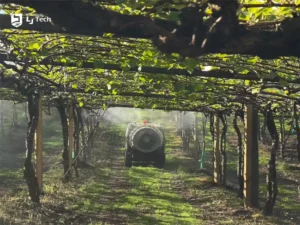
Many commercial fruit growers today are shifting from traditional tractor‑pulled sprayers toward autonomous orchard sprayer robots. Most buying guides focus purely on machine specifications, working speed, and navigation performance. However, successful adoption does not end the day your new robot rolls into the orchard. Long‑term results heavily depend on routine maintenance schedules, spare‑part planning, after‑sales support, and careful calculation of return on investment. If you want your ground‑based plant‑protection robot to deliver consistent value year after year, you need to prepare for its full‑lifecycle operation.
Why Lifecycle Maintenance Matters for Orchard Spraying Robots
Orchard working environments are harsh. Mud, dust, pesticide residues, tree branches, vibration on hilly slopes all continuously wear down your autonomous orchard sprayer. Unlike stationary farm equipment, these robots combine mechanical spraying systems, high‑precision RTK‑GNSS navigation, lidar sensors, onboard computing units and diesel or electric power systems. Every subsystem needs regular inspection.
Common Environmental Damages in Orchard Conditions
Pesticide chemical residue is one of the biggest hidden risks. Spray mist can settle onto sensor housings, chassis joints, cooling parts, and rubber seals. Over several growing seasons, leftover chemicals may slowly corrode metal surfaces or blur protective sensor covers. On hilly orchards, repeated up‑and‑down travelling creates extra stress on tires or crawler tracks, wheel bearings and suspension structures. Dense tree rows also increase minor scraping incidents with branches. Even small scratches on radar and lidar protective windows can gradually degrade navigation reliability.
What Happens When You Skip Scheduled Servicing
Skipping maintenance will not immediately stop your robot. Problems tend to build up quietly. Blocked nozzles lead to uneven spray coverage across fruit tree canopies. Dirty sensor windows trigger frequent emergency stops during autonomous missions. Worn crawler tracks reduce climbing capability on sloped ground. In the worst‑case scenario, sudden breakdown can happen right in your narrow pesticide application window during peak disease or pest pressure, which may cause costly crop losses.

Key Regular Maintenance Checklist for Autonomous Orchard Sprayer Robots
A practical maintenance plan should be split into three levels: after‑each‑use inspection, weekly routine check, and seasonal deep service before and after each growing campaign.
Basic Cleaning After Every Spraying Job
- Right after finishing spraying work, flush the whole liquid pipeline, spray tank, filters and nozzles to remove pesticide residuals. Wipe the outer protective covers of lidar, RTK antenna and vision sensors carefully. Do not use strong corrosive cleaning agents on sensor surfaces. Inspect crawler tracks or wheels for tangled twigs, leaves and mud before parking the machine.
Weekly Inspection During Busy Spraying Seasons
- Every week, operators should check fluid levels, hose tightness, nozzle wear status, and cable connectors. Confirm that emergency stop buttons work correctly. Run a short autonomous test mission inside the orchard to verify navigation response. If you operate multiple robots for multi‑machine collaborative spraying, also check communication status between robots and the smart farm management platform.
Seasonal Deep Maintenance for Off‑Winter Storage
- Once the annual spraying season finishes, seasonal maintenance is critical. Drain all remaining liquid inside pumps and pipes to avoid freezing damage in cold winter. Complete overall chassis inspection, replace heavily worn seals, nozzles, track pads. Update onboard software firmware following official manufacturer guidance. Store the robot under shelter whenever possible, away from constant rain and direct sunlight.

After‑Sales Support & Spare‑Part Supply — Often Overlooked Buying Factor
When orchard growers compare different autonomous sprayer solutions, many only look at technical parameters and initial purchase price. Reliable after‑sales service and stable spare‑part supply directly influence uptime over the whole machine lifespan.
For farms located in remote rural zones or overseas markets, response time for technical support matters a great deal. Remote diagnostic functions on modern orchard robots allow technical teams to review log data and troubleshoot many software‑related issues online. Still, you should confirm whether your equipment supplier can deliver critical spare parts in reasonable time frames. Local service partners can greatly reduce downtime during busy plant‑protection periods. Lanjiang Tech provides both online remote technical support and global spare‑part shipment service for S450, S500Pro and S1000 autonomous orchard sprayers.
How to Calculate Real‑World Long‑Term ROI for Autonomous Orchard Sprayers
Return on investment calculation for orchard spraying robots goes beyond simple labour‑cost savings. You need to count several groups of costs and benefits.
Main Cost Items You Should Include
- Upfront capital purchase cost of the robot system
- Annual routine maintenance, consumables: nozzles, filters, track rubber pads
- Fuel or power consumption cost during operation
- Operator training cost (one supervisor can manage several robots simultaneously)
- Occasional spare‑part replacement expense

Key Economic Benefits from Robotic Spraying
The most obvious saving comes from reduced reliance on seasonal spray workers. In many fruit‑growing regions, skilled orchard spray labour is becoming harder to recruit and more expensive year by year. Secondly, precision spraying technology helps cut total pesticide consumption, reducing annual chemical input expenses.
More consistent spray coverage also improves pest and disease control results, which helps stabilise fruit yield and quality. In addition, autonomous robots can run spraying missions early in the morning or late in the evening, expanding your available working time window when human workers are unwilling to operate under harsh conditions.
Buying an autonomous orchard sprayer robot is a long‑term farm investment, not just a one‑time equipment purchase decision. Great navigation performance and powerful spraying capacity can only bring benefits when matched with solid maintenance habits, dependable after‑sales support and realistic ROI expectations.
Before placing an order, take time to discuss maintenance requirements, spare‑part policy and technical training with your supplier. If you would like to know more about autonomous spraying solutions for your own orchard, feel free to contact our team for consultation and demo arrangement.